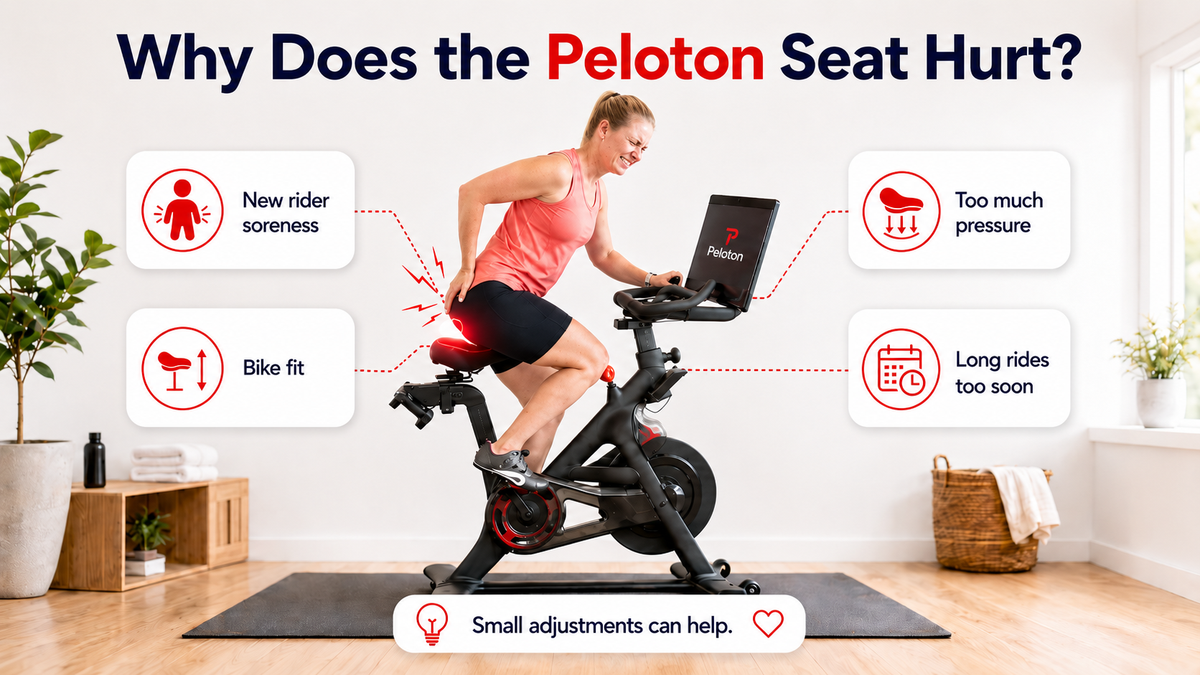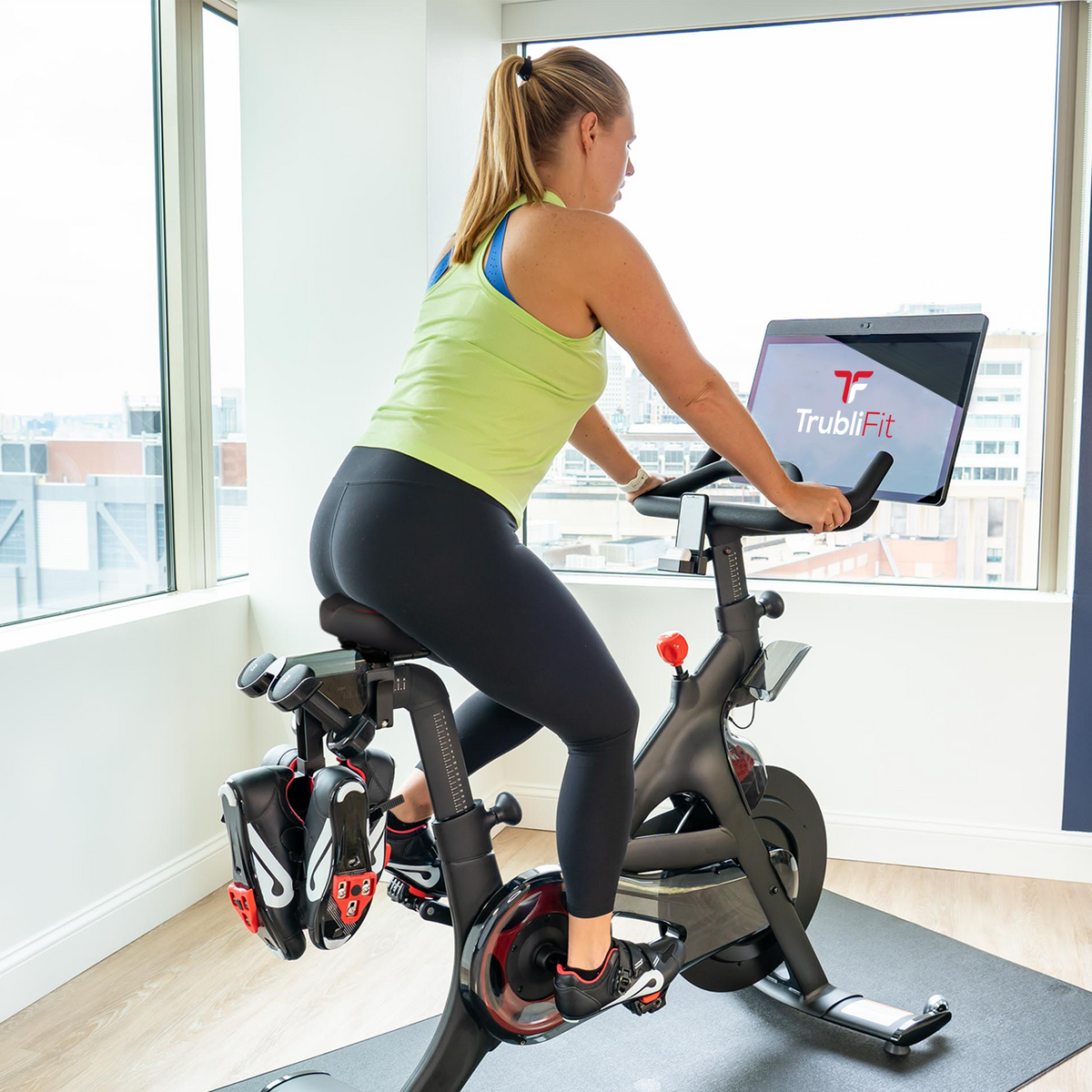
If the stock Peloton® seat feels too narrow, you are not imagining it. The original saddle is shaped like a performance road bike seat: narrow, firm, and built for riders leaning forward. On an indoor bike, where you spend more time sitting upright, that shape puts a lot of pressure on a small area.
For bigger riders, the problem usually is not toughness or time in the saddle. The seat is simply too small to support you properly. Here is what to look for and how to pick the right fix.

Why the Stock Seat Can Feel Wrong for Bigger Riders
- Width: a narrow saddle may not fully support your sit bones, so pressure lands on soft tissue instead
- Firmness: thin padding concentrates your weight on fewer points
- Heat and chafing: a narrow shape with little airflow can lead to rubbing on the inner thighs
Sitting upright puts more of your weight on the seat, which is why these issues show up fast on an indoor bike.

What to Look For in a Peloton® Seat
- A wider platform that fully supports your sit bones
- Real cushioning, like memory foam, rather than a thin pad
- Suspension to absorb pressure on every pedal stroke
- Ventilation and a center groove to reduce heat and pressure
- A secure fit on your exact bike, so it does not shift or tilt
Seat Cover vs Replacement Seat
A padded seat cover adds cushioning on top of the stock saddle. It is a good choice if the width feels fine and you just want more padding.
If the seat feels too narrow, a cover will not fix that, because the same shape is still underneath. That is when a replacement seat makes more sense.
Our Pick: The TrubliFit Extra Wide Seat
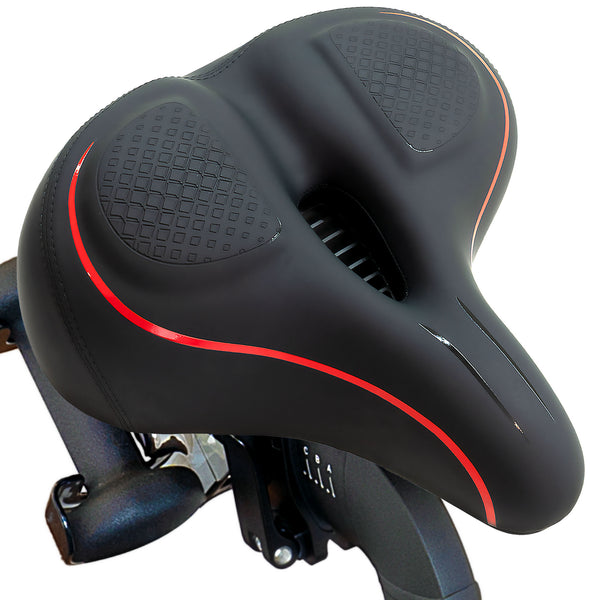
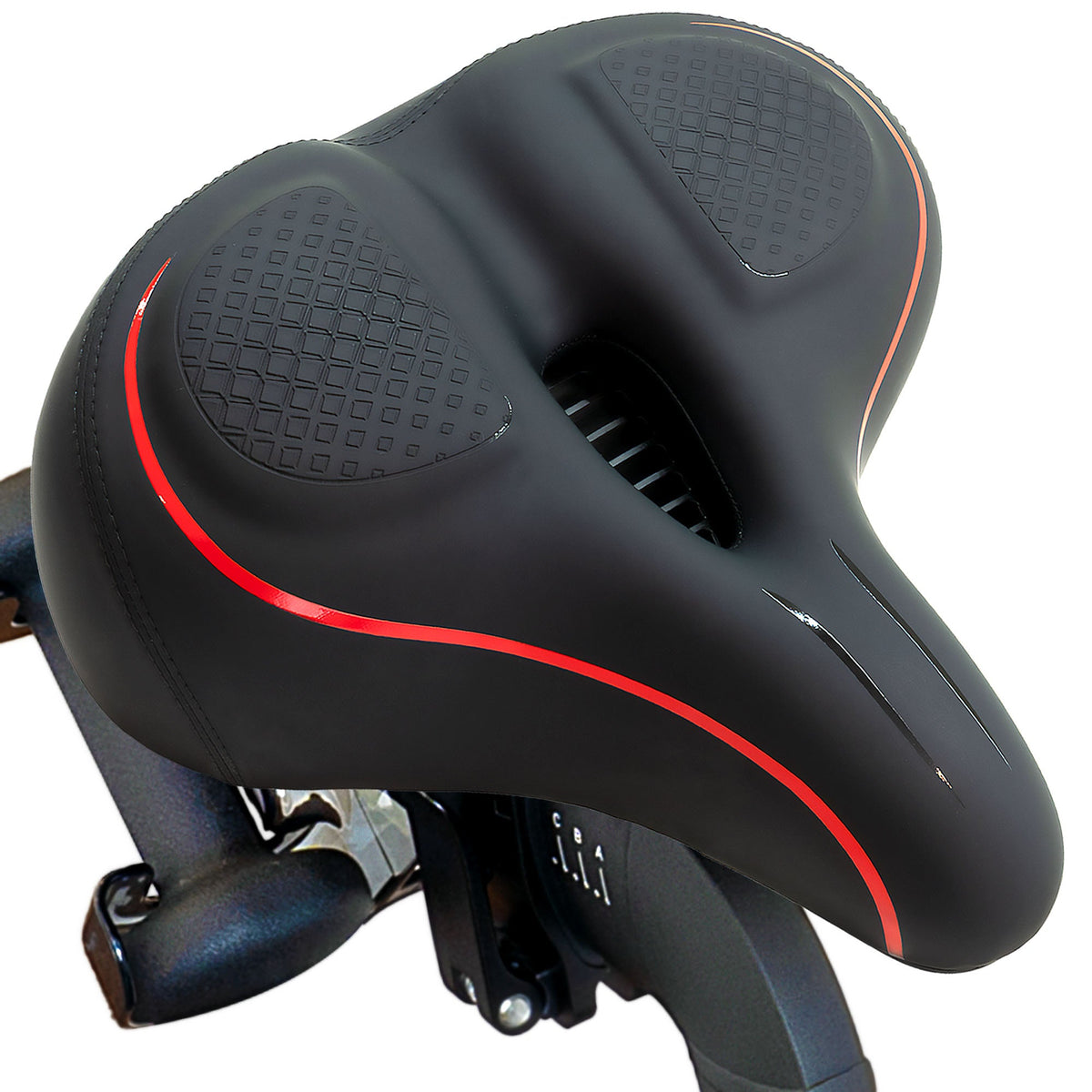
The TrubliFit Extra Wide Seat is a full replacement seat, not a cover, designed for riders who want more support.

- 10.5 x 10.5 inch platform for full sit bone support
- High density memory foam for cushioning that holds up
- Elastomer spring suspension to absorb pressure
- Vent holes and a center groove for airflow and pressure relief
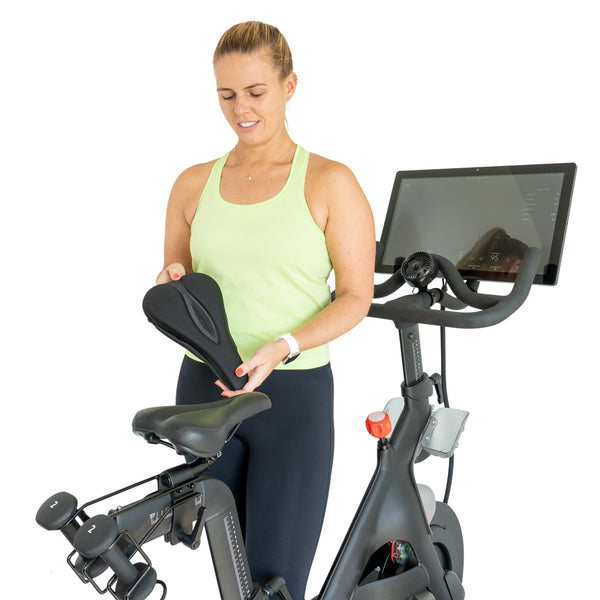
- Fits all Peloton® bikes: Original Bike, Bike+, Cross Training Bike, and Cross Training Bike+
- Installs with the included wrench and Allen key

Setup Tips After You Swap Your Seat
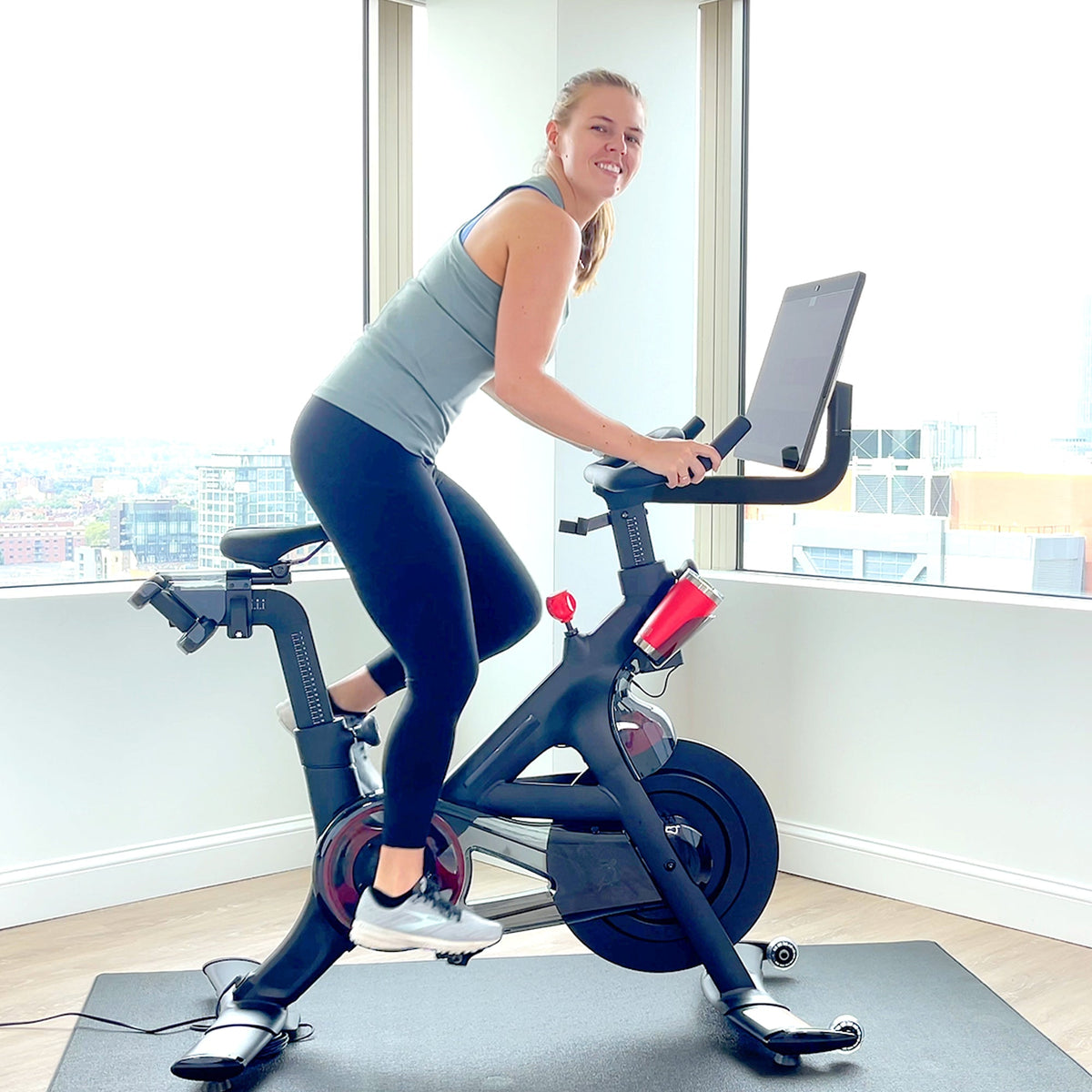
- Level it. A seat tilted nose up adds pressure in front. Tilted nose down, it slides you forward onto your hands. Start level and adjust in small steps.
- Recheck your seat height. A thicker seat can raise your sitting position slightly, so lower the seat post if needed. Your knee should have a slight bend at the bottom of the pedal stroke.
- Give it a few rides. Any new seat takes a little time to feel normal.
- Add padded shorts for longer classes if you still feel pressure.

Want help with your fit? Read our Peloton® Setup Guide.
The Bottom Line
If you are a bigger rider and the stock seat hurts, the issue is usually the seat, not you. A wider, cushioned replacement seat spreads your weight out, so you can focus on the ride instead of counting down the minutes.
TrubliFit is an independent brand and is not affiliated with, endorsed by or sponsored by Peloton Interactive, Inc. Peloton® is a registered trademark of Peloton Interactive, Inc.